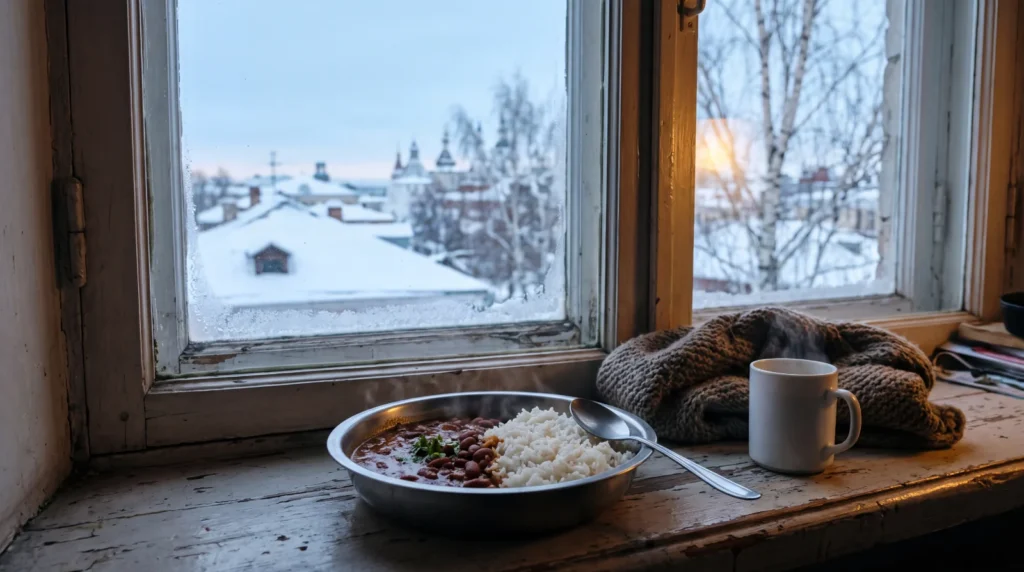
The best Indian food for MBBS students in Russia is a small stock of light, sealed, vegetarian meals and dry staples that survive a long journey and a cold hostel room, such as freeze-dried dal chawal, rajma chawal and khichdi, plus spice mixes, dal and poha. Pack enough for your first three to four weeks, keep milk and meat products at home, and plan to cook simple Indian meals once you find the nearest Indian or Central Asian grocery.
Most Indian students land in Russia in late August or September and face long registration queues, a new language and, within weeks, a hard winter. Cities like Kazan, Orenburg, Omsk, Kursk and Smolensk have Indian students in every hostel, but the first month is when home food matters most.
What Indian food should MBBS students take to Russia?
Think in three groups: meals you can eat on day one with no shopping, staples you will cook with for months, and small comforts that are hard to find in Russia.
| Group | What to pack | Why it works in Russia |
|---|---|---|
| Ready meals | Freeze-dried dal chawal, rajma chawal, khichdi, poha, upma | Light in the suitcase, need only a kettle, no fridge needed |
| Staples | Toor dal, moong dal, besan, poha, sooji | Dry, cheap in India, slow to find in small Russian cities |
| Spices | Haldi, jeera, hing, garam masala, sambar and chole masala | Small, sealed packs last a full semester |
| Comforts | Pickle in a sealed factory jar, tea, roasted chana, namkeen | Familiar taste on bad exam days |
Leave out ghee, paneer, milk sweets, fresh fruit and vegetables, seeds for planting and anything with meat. Russia applies strict veterinary and plant health rules to food that travellers bring in, so check the Federal Customs Service of Russia website before you fly and declare anything you are not sure about.
Why freeze-dried meals suit a Russian hostel
A typical MBBS hostel in Russia has a shared kitchen on each floor, with two or four hobs for 30 or more students. In the first weeks you may not have your own pots, and the queue at dinner time can be long. A kettle in your room solves most of this.
- No fridge needed. Shared fridges fill up fast, and freeze-dried food stays good at room temperature.
- Light to carry. With most of the water removed, a month of meals weighs far less than the same meals in wet retort pouches, which leaves room for a heavy winter jacket.
- Quick between classes. Anatomy and physiology days run long. Hot water, 7 minutes, and a full plate of dal and rice is ready.
- Handles the cold. Winters often fall to minus 20°C or lower in Siberian and Volga cities. Dry food is not harmed by a cold room or a long walk from the bus.
For the first weeks, freeze-dried rajma chawal and freeze-dried dal tadka chawal are the two meals most students reach for, because they feel like a proper home lunch, not a snack. Spice Up Foods makes both: 100% vegetarian, No preservatives, with a 6 months shelf life.
How much food should you carry to Russia?
Check the checked baggage allowance on your ticket first, because winter clothes, a laptop and medical textbooks use much of it. A sensible plan:
- Ready meals: one a day for three to four weeks, about 20 to 28 meals.
- Dal and besan: 1 to 2 kg each, enough until you find a shop.
- Spices: one 100 g pack of each, kept in a zip bag.
- Snacks and tea: what fits in the gaps of your suitcase.
Keep everything sealed in its original pack with the label showing. Put pickles and anything oily in the checked bag, wrapped in a plastic bag and then in clothes.
Is it easy to find vegetarian Indian food in Russia?
It depends on the city. Moscow and Saint Petersburg have Indian restaurants and grocery shops. Smaller university towns often have one Indian mess run near the hostel, and some universities have an Indian canteen. Russian supermarkets sell rice, buckwheat, potatoes, cabbage, onions, tomatoes and tvorog, a fresh cottage cheese that works in place of paneer in a pinch.
What students miss most is dal, good rice, hing and Indian spices. Central Asian markets in many cities sell chickpeas, lentils and spices at fair prices, so after the first month you mostly need to top up spices from home.
A common mistake is to assume the hostel mess will cover you. Mess food is often non-vegetarian or cooked in shared vessels, and timings may not match hospital postings in later years. A small stock of your own vegetarian meals removes that worry.
A simple first-month food plan
- Week 1: ready meals for lunch and dinner while you sort registration, a SIM card and a bank card.
- Week 2: buy a pot, rice, onions and tomatoes, and cook dal with your own spices on weekends.
- Weeks 3 and 4: cook most dinners, and keep ready meals for late classes, exam days and when you are unwell.
- After that: keep five to ten meals as a backup for winter weeks when going out in the snow is hard.
If you want to understand why freeze-dried meals keep so long without a fridge, this guide to freeze-dried Indian food for students abroad explains it simply.
Read next: Ready-to-eat food for students going abroad and Indian food to take to Germany as a student
Questions people ask
Can I take Indian food to Russia for MBBS?
Yes, students commonly carry sealed, dry, vegetarian food such as dal, spices, poha and ready meals for personal use. Meat and milk products face strict rules, so check the Federal Customs Service of Russia website before travel and declare anything you are unsure about.
Is vegetarian food available for Indian students in Russia?
Yes, but it takes some effort. Big cities have Indian restaurants and shops, and many university towns have an Indian mess. Supermarkets sell rice, potatoes, vegetables and lentils, so most students cook their own vegetarian meals after the first month.
How much food should an MBBS student carry to Russia?
Enough for three to four weeks is usually right: about 20 to 28 ready meals, 1 to 2 kg of dal and besan, and small packs of spices. Baggage space is better used for winter clothing after that.
What is the easiest Indian meal to make in a Russian hostel?
A freeze-dried meal such as dal chawal or rajma chawal is the easiest, because it needs only a kettle. Hot water, 7 minutes, and it is ready to eat, with no pots, no shared hob and no fridge.
For a taste of home in your first Russian winter, Spice Up Foods makes freeze-dried, 100% vegetarian Indian meals like rajma chawal, dal chawal and khichdi that need only a kettle. See Spice Up Foods meals