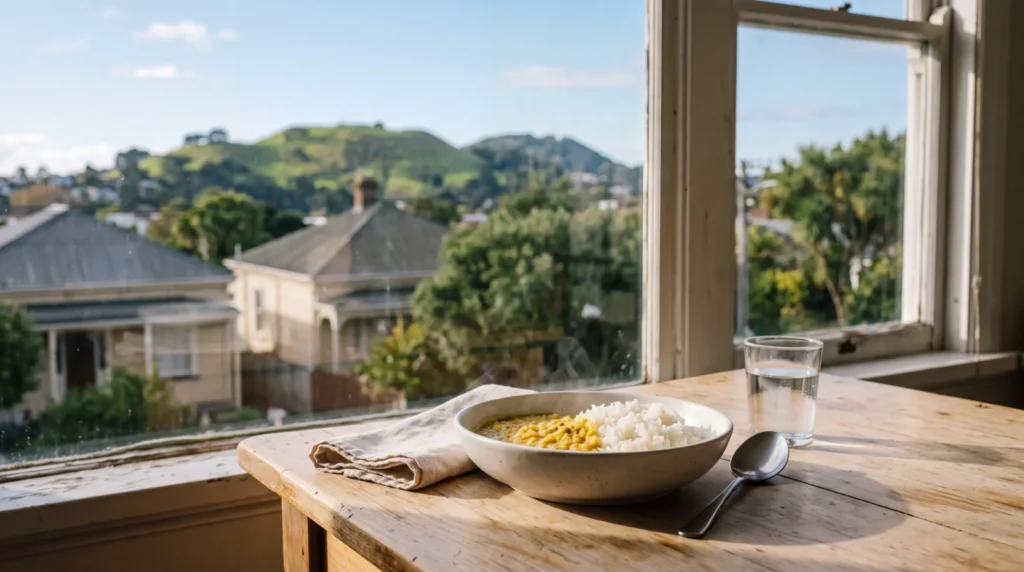
The best Indian food to take to New Zealand as a student is a small supply of sealed, factory packed vegetarian food, such as ready meals, ground spice mixes, poha and snacks, and you must declare every food item on your New Zealand Traveller Declaration. New Zealand checks food at the border more closely than almost any other country, so a short, well chosen list beats a heavy suitcase of home food.
Quick answer: pack 2 to 3 weeks of sealed, shelf stable vegetarian meals and basic spices, tick “yes” for food on your declaration, keep the food in one bag you can open quickly, and leave fresh fruit, seeds, homemade sweets and anything with loose dairy at home.
Why does New Zealand check food so closely?
New Zealand’s farms, forests and native plants have been cut off from the rest of the world for millions of years. One fruit fly, plant disease or contaminated seed could damage crops and exports worth billions. The Ministry for Primary Industries (MPI) runs biosecurity at every airport, and officers use X ray machines and detector dogs on arriving bags.
The rule that matters most is simple: declaring food is never a problem, but not declaring it can be. If you declare an item and it is not allowed, an officer usually takes it and you walk on. If you do not declare it and it is found, you can be fined on the spot. MPI has a page with advice written for travellers from India, so read it before you pack.
What Indian food can you take to New Zealand?
Students usually get through with these items after declaring them and letting an officer check them. Final decisions are always made at the border.
- Sealed ready meals: retort pouch or freeze-dried dal chawal, rajma chawal, khichdi, poha and upma, in their original factory packs.
- Ground spice mixes: haldi, red chilli, garam masala, sambar powder and chaat masala in sealed shop packs.
- Dry snacks: factory packed namkeen, khakhra and biscuits.
- Instant mixes: sealed packs of upma, poha, idli and dosa mix.
- Pickles: sealed, shop bought vegetarian pickles in oil.
What causes problems at the New Zealand border?
These are the items most often taken away or held for treatment. Some are allowed only with conditions, so check MPI before you pack them.
| Item | Why it gets checked | What to do |
|---|---|---|
| Fresh fruit, vegetables, curry leaves | Can carry fruit fly and plant disease | Leave at home |
| Whole seeds (methi, mustard, ajwain, jeera) | Seeds can grow into weeds | Prefer ground spices in sealed packs |
| Ghee, paneer, khoa, milk sweets | Dairy is a risk item | Declare clearly or skip |
| Homemade food, ladoos, prasad | No label, unknown ingredients | Declare, expect it may be taken |
| Raw rice, dal and flour in large bags | Can carry insects | Carry small sealed packs only |
A common mistake is packing a box of mithai or a jar of homemade achaar “just to share” and forgetting to declare it. Small items count too, so declare them. If family wants to send sweets, buy sealed, labelled packs and declare them.
How much food should an Indian student carry to New Zealand?
Most students need food for the first 2 to 3 weeks, while they find a flat, open a bank account and work out the local shops. After that, Indian groceries in Auckland, Wellington, Christchurch and Hamilton cover most needs at a higher price than at home.
- 14 to 20 ready meals for days with no time or no kitchen
- 1 kg of dal and 1 kg of besan or atta, sealed
- 5 or 6 small packs of ground spices
- A few packs of poha or upma mix for breakfast
- A small steel tiffin or a reusable meal tub and a spoon
Keep the food together in one bag, ideally your check in bag, with labels facing up. Officers can see it quickly and the check takes minutes, not an hour.
Which ready meals travel best to New Zealand?
Freeze-dried meals are the easiest to carry. They weigh very little because the water is removed, they stay sealed until you open them, and they need only hot water. For a long flight via Singapore, Kuala Lumpur or Sydney, light food matters because baggage weight runs out fast.
Simple vegetarian meals without dairy are also simpler at the border. Good choices for the first weeks are freeze-dried dal tadka chawal for dinner and freeze-dried poha for breakfast. Both are 100% vegetarian with no preservatives, have a 6 months shelf life and need only hot water, 7 minutes. Declare them like any other food.
To understand how these differ from retort pouches and dehydrated packs, read this guide to freeze-dried Indian food for students abroad.
How do you declare food when you land in New Zealand?
- Fill in the New Zealand Traveller Declaration online before you fly, and answer “yes” to the food question.
- Keep the food in one bag and know which bag it is.
- At the biosecurity area, tell the officer you have Indian food and spices.
- Open the bag if asked and let the officer check each item.
- Accept the decision. If an item is taken, it is not a fine.
Rules change, so check the official MPI and New Zealand Customs websites in the week you travel.
How do Indian students eat well in their first weeks?
Many student flats in New Zealand have a shared kitchen with an electric kettle, a microwave and a hob, but no spices and no pressure cooker. In the first week, a kettle and a few ready meals carry you through. By week three, most students cook dal, rice and sabzi with vegetables from the local supermarket and spices from an Indian store. Halls of residence often serve Western food, so a stock of familiar meals helps on long study days and during exams.
Read next: Indian food to take to Australia as a student and ready-to-eat food for students going abroad
Questions people ask
Can I take Indian food to New Zealand?
Yes, students commonly carry sealed, factory packed vegetarian food such as ready meals, ground spices and snacks for personal use. You must declare all food on your New Zealand Traveller Declaration, and an officer decides what is allowed in.
Can I take spices to New Zealand from India?
Ground spices in sealed shop packs are usually fine after inspection. Whole seeds such as methi, mustard and ajwain are checked more closely and may be taken, so ground versions are the safer choice.
What happens if I do not declare food in New Zealand?
If undeclared food is found, you can be fined on the spot, and serious cases can affect your visa. Declaring food costs nothing, even if the item is then taken away.
Is ghee allowed in New Zealand?
Ghee and other milk products are treated as risk items and need to be declared. Some sealed commercial dairy is allowed and some is not, so check the MPI website before packing it.
For the first busy weeks in a new country, Spice Up Foods makes freeze-dried Indian meals that need only hot water and pack light in a suitcase. See Spice Up Foods meals