You can take most sealed, factory packed vegetarian food to Australia as a student, such as spice mixes, freeze-dried meals, dal and packaged snacks, but you must declare every food item on your arrival card. Meat, many dairy products, fresh fruit and vegetables, seeds and homemade food cause the most problems, so pack a small amount of sealed food and leave the rest at home.
This guide explains what Indian students usually carry, what tends to cause trouble at the airport, and how to eat well in your first few weeks without a full kitchen.
Why Australia is stricter than most countries
Australia is an island with farms and wildlife that have never met many pests and plant diseases found elsewhere. One infected seed or piece of fruit could harm crops worth billions. That is why the government checks food at every airport so closely.
The rules are run by the Department of Agriculture, Fisheries and Forestry. Its official advice for students is simple: if you are unsure about an item, declare it, or do not bring it.
Do I need to declare food in Australia?
Yes. On the Incoming Passenger Card you must say if you are carrying any food, plant material or animal products. That includes a single packet of biscuits or a small box of masala.
Declaring does not mean your food will be taken. An officer may ask questions, scan your bag or look inside it. Items that are low risk are handed back. Items that are not allowed can be treated, sent back at your cost, or left behind in a bin.
The official department page says you will not be penalised under the Biosecurity Act if you declare and show all your goods, even ones that are not allowed in. Not declaring is where students get into real trouble, with fines and even visa cancellation possible.
Indian food to take to Australia as a student
Choose food that is sealed, factory made and clearly labelled in English. Good choices to consider:
- Ground spice blends in sealed packs, such as garam masala, sambar powder or chole masala
- Instant noodles and ready meal packs that are commercially sealed
- Freeze-dried Indian meals that only need hot water
- Packaged sweets and biscuits from a proper shop, not homemade
- Tea (black or green), instant coffee and chocolate
Keep everything in its original packet so the officer can read the ingredients. Put all food in one bag or one part of your suitcase so it is quick to show.
Which ready meals should students take to Australia?
A few sealed, vegetarian ready meals are the most useful thing in a student’s bag for the first week, when you have no pans, no groceries and a lot of paperwork. Freeze-dried meals are light, have 6 months shelf life and need only hot water, 7 minutes, so a kettle in a shared house or student room is enough.
- Freeze-dried yellow dal chawal for the arrival night and the first few dinners.
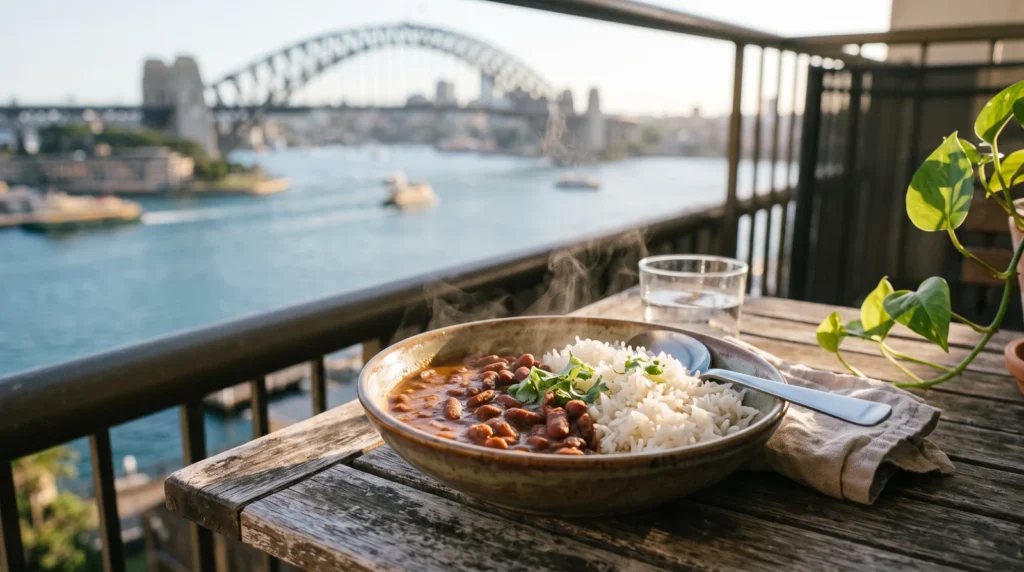
- Freeze-dried rajma chawal for a filling meal after a long day of orientation and bank visits.
Choose meals with no meat, read the ingredient list for milk products, keep them in their original packs, and declare them on arrival like every other food item. Ten to fifteen meals cover the first two weeks well.
Can I take Indian spices to Australia?
This is the question most students ask. The official list of risky items includes seeds and spices, and whole dried chillies unless they are ground. In plain words, whole spices like jeera, methi seeds, mustard seeds or whole red chillies are more likely to face problems.
Ground, sealed spice mixes from a factory are a far safer bet, but they still need to be declared. If a spice is very important to you, check it first in BICON, the official import conditions database, because rules change often.
What usually causes problems
These items appear on the official list of food that is restricted or not allowed:
- Home cooked food, including mum’s pickles, laddoos and theplas
- Fresh fruit and vegetables
- Rice
- Seeds, nuts and whole spices
- Dairy such as milk, butter, cheese, yoghurt and paneer
- Meat products of any kind
Ghee and shop bought pickles are not named clearly on the student page, so treat them with care. Declare them, and check BICON before you pack them.
Vegetarian food in Australia for Indian students
The good news is that you will not go hungry. Big cities like Sydney, Melbourne, Brisbane and Adelaide have Indian grocery shops in many suburbs. You can buy dal, atta, basmati rice, paneer and almost every spice locally, often at fair prices.
Plenty of cafes and food courts also offer vegetarian dishes. Supermarkets label vegetarian and vegan food clearly, which helps if you avoid eggs.
So the food you carry is really for the first one or two weeks. That is the time when you are tired, finding your way, waiting for your bank card and maybe living without a proper kitchen.
Smart packing tips for your first week
- Pack enough for 7 to 10 days, not 3 months
- Pick meals that only need hot water, since a kettle is easier to find than a stove
- Keep receipts and original packets together
- Tick yes for food on your arrival card, every time
- Read the latest rules on the official Department of Agriculture, Fisheries and Forestry website a week before you fly
Read next: what Indian students can pack for Canada, or Indian food to carry to Germany as a student.
Questions people ask
What Indian food can I take to Australia as a student?
Sealed, factory packed food is the best choice, such as ground spice mixes, instant meals, packaged snacks and tea. Declare all of it on your Incoming Passenger Card.
Do I need to declare food when I land in Australia?
Yes. You must declare any food, plant material or animal products. Declaring is free, and the official department says you will not be penalised for declaring goods, even if they are not allowed.
Can I take Indian spices to Australia?
Ground and sealed spice mixes are usually the safer option. Whole spices, seeds and whole dried chillies are on the restricted list, so check BICON before packing them.
Can I take homemade food to Australia?
Home cooked meals are on the official list of food that is restricted or not allowed. It is better to buy packaged food or shop at an Indian grocery store after you arrive.
Can I take ready-to-eat meals to Australia?
Sealed, commercially made vegetarian ready meals are commonly carried by students, but they must be declared and may be inspected. Meals with meat are generally not allowed and some dairy is restricted, so check the official Australian biosecurity site before you fly.
If you want an easy first week meal that only needs a kettle, Spice Up Foods makes freeze-dried Indian meals that are 100% vegetarian with No preservatives and a 6 months shelf life, ready with Hot water, 7 minutes. See Spice Up Foods meals