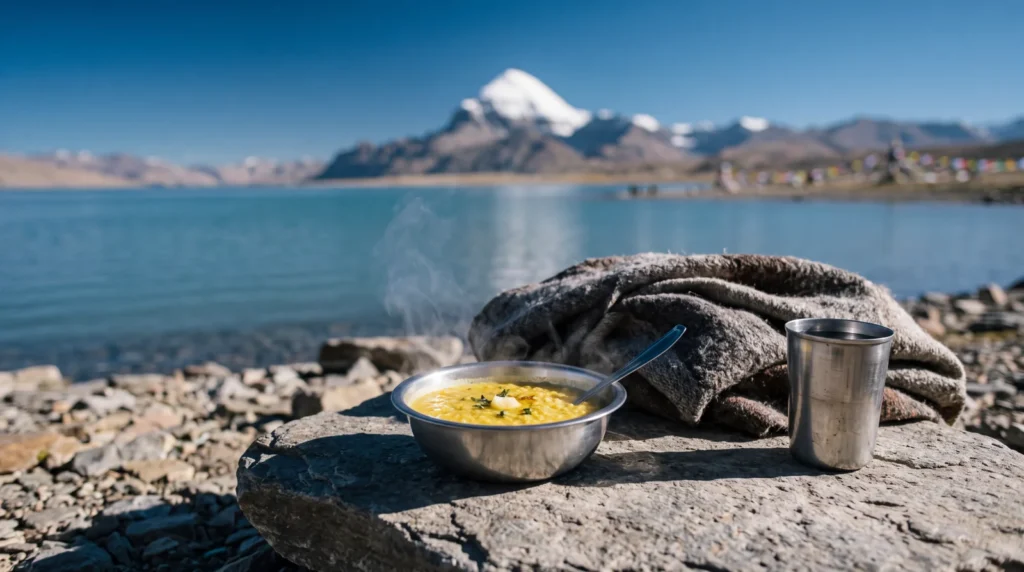
On the Kailash Mansarovar Yatra, most tour groups serve simple vegetarian meals, but on the three-day parikrama and the long drive across Tibet, good vegetarian food is thin, so carry light food that only needs hot water. The best Kailash Mansarovar Yatra food to pack is freeze-dried dal rice or khichdi, instant poha or upma, dry fruit, roasted chana, glucose biscuits and electrolyte powder, enough for at least four to five meals.
Quick answer: eat what the group kitchen serves in towns, and use your own packed meals on parikrama days, at Dirapuk and Zutulpuk, and whenever your appetite drops at altitude.
What food is available on the Kailash Mansarovar Yatra?
It depends on which route you take and who runs your group.
- Tours from Nepal (via Kathmandu and the Kerung border): most operators bring a cook or a kitchen team and serve vegetarian Indian style meals such as dal, rice, roti, sabzi and khichdi at hotels and camps. Breakfast is usually porridge, bread, potatoes and tea.
- Government yatra from India (via Lipulekh or Nathu La): meals are arranged along the route as part of the yatra, and are vegetarian.
- The parikrama around Mount Kailash: this is where food gets hard. The 52 km walk takes three days, with nights at simple guesthouses at Dirapuk and Zutulpuk. Food there is basic: instant noodles, plain rice, Tibetan bread, butter tea. Group kitchens often send only packed lunches with you.
So the gap is not the whole trip. It is the three parikrama days, long drive days, and the times you feel too sick or tired to eat what is put in front of you.
Why does food matter so much at Kailash?
Lake Mansarovar sits at about 4,590 m and the Dolma La pass on the parikrama is about 5,630 m. At that height, three things happen to almost everyone:
- Appetite drops. Many pilgrims stop feeling hungry after Saga or Darchen. Eating anyway is part of staying strong for the walk.
- Water boils at a lower temperature, around 83 to 85°C instead of 100°C. Rice and dal take much longer to cook, and some kitchens serve them half done.
- Heavy, oily food sits badly. Simple, soft, warm food like khichdi or dal rice is easier to eat than fried snacks.
This is why familiar, soft food that you can make with just hot water is so useful here.
What to carry: a food packing list for Kailash
| Food | How many | Why it works |
|---|---|---|
| Freeze-dried dal rice or khichdi | 4 to 6 meals | Light, dry, needs only hot water, familiar taste on hard days |
| Instant poha or upma cups | 2 to 3 | Quick breakfast before an early start |
| Dry fruit and nuts (dates, raisins, almonds) | 500 g | Small bites while walking |
| Roasted chana or makhana | 2 small packs | Salty snack, does not crush to powder |
| Glucose biscuits and chikki | 3 to 4 packs | Fast energy on the climb to Dolma La |
| Electrolyte or ORS powder | 10 sachets | Makes it easier to drink enough water |
| Small steel or plastic mug with lid | 1 | For rehydrating meals and drinking tea |
Keep it light. On the parikrama you either carry your own day bag or pay for a porter or pony, and every kilo counts at 5,000 m.
Which ready meals are best for the yatra?
Choose meals that are dry, sealed and vegetarian, and that you have already tasted at home. Two things to check:
- Freeze-dried, not wet retort pouches. A wet curry pouch is mostly water, so it can weigh several times as much as a freeze-dried meal of the same dish, and gravy can leak if a pouch gets crushed in a bag.
- Simple, sattvic dishes. Many pilgrims prefer food without onion and garlic during the yatra. Plain khichdi and dal rice suit almost everyone.
Good picks to pack are freeze-dried khichdi and no onion no garlic yellow dal chawal. Both are 100% vegetarian, have no preservatives, and keep a 6 months shelf life, so you can buy them well before the trip. At home the method is hot water, 7 minutes. For why freeze-dried food is so much lighter for walking, see this guide to freeze-dried meals for trekking.
How do you make freeze-dried food at high altitude?
Because water boils below 100°C in Tibet, give the food extra time.
- Ask the guesthouse or your cook for water straight off the boil. Most will sell or give a flask of hot water.
- Pour it in up to the fill level, stir well, and reach into the corners.
- Close the lid or seal and wrap the cup in a jacket or shawl to keep the heat in.
- Wait 10 to 12 minutes instead of the usual time, stir again, and taste. If the rice is still firm, add a little more hot water and wait a few more minutes.
Do not try to rehydrate with cold water on the trail. It can take an hour or more, and cold food is hard to eat at altitude.
Can you carry food from India or Nepal into Tibet?
Pilgrims do carry sealed, packaged vegetarian snacks and meals, but border rules are set by Chinese customs and can change. Fresh fruit, vegetables, meat and dairy are the items most often stopped at borders. Keep food in its sealed packet, carry only personal amounts, declare food if you are asked or if the form requires it, and check the latest rules with your tour operator and the official customs website before you travel. Never assume something will be allowed.
What goes wrong, and how to avoid it
- Packing too much. Most groups need four to six own meals, not one for every day. Kitchens cover the rest.
- Trying food for the first time on the trip. Eat one of your packed meals at home first so you know you like it.
- Leaving food in the main bag. On parikrama days your main luggage often stays in Darchen. Put two meals, snacks and your mug in the bag that goes with you.
- Not drinking enough. Thirst also drops at altitude. Hot soup, tea and rehydrated meals all help. For altitude medicines and health questions, follow your doctor.
For more on high-altitude food, read about vegetarian food on the Everest Base Camp trek.
Read next: Annapurna Circuit trek food and Can you take ready-to-eat food on a plane?
Questions people ask
Is vegetarian food available on the Kailash Mansarovar Yatra?
Yes. Most organised groups, from Nepal or India, serve vegetarian meals in towns and camps. On the three-day parikrama around Mount Kailash food is very basic, so most pilgrims carry a few of their own hot-water meals and snacks for those days.
What food should I carry for the Kailash parikrama?
Carry two to four light meals that need only hot water, such as freeze-dried khichdi or dal rice, plus dry fruit, roasted chana, glucose biscuits and electrolyte powder. Keep them in the day bag that goes with you, because main luggage often stays in Darchen.
Why does food take longer to cook at Mansarovar?
Lake Mansarovar is at about 4,590 m, where water boils at around 83 to 85°C instead of 100°C. Food cooks and rehydrates more slowly, so give freeze-dried meals extra minutes in a closed cup, wrapped to keep the heat in.
Can I take Indian food into Tibet for the yatra?
Many pilgrims carry sealed, packaged vegetarian food in personal amounts, but Chinese customs sets the rules and they can change. Avoid fresh produce and dairy, keep food sealed, declare it if asked, and check the official customs rules and your tour operator’s advice before you go.
Spice Up Foods makes freeze-dried Indian meals that are 100% vegetarian and need only hot water, which makes them easy to pack for a high-altitude pilgrimage. See Spice Up Foods meals