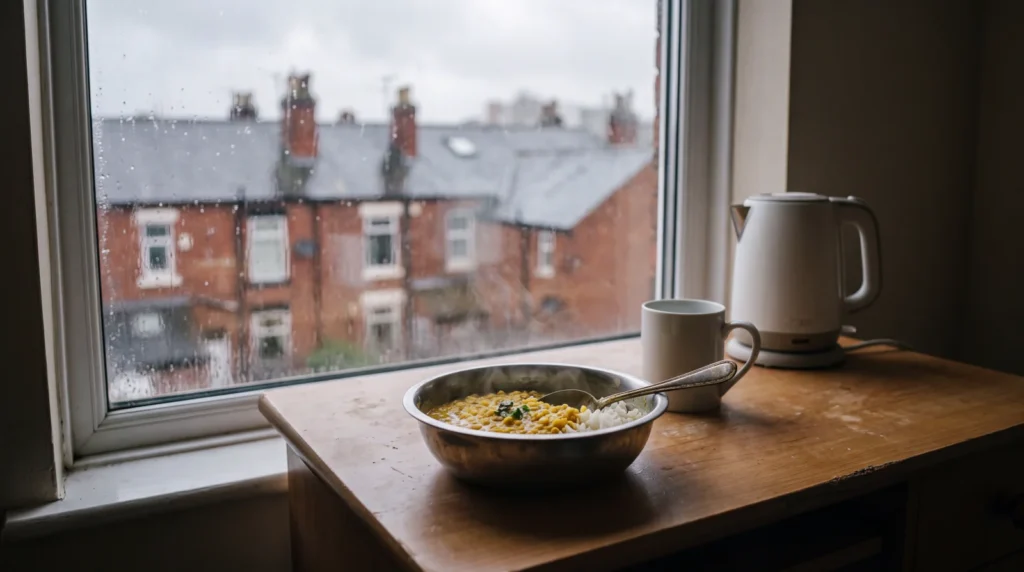
The best ready to eat food for students going abroad is shelf-stable Indian food that needs only hot water: freeze-dried dal chawal, rajma chawal and khichdi, instant poha or upma, a few retort pouch curries and some dry snacks. Pack enough for the first 2 to 4 weeks in your checked bag, declare food on arrival wherever the country asks, and the first month abroad will not be toast, cereal and instant noodles while you find an Indian store and set up a kitchen.
Quick answer: carry 15 to 25 light, no-fridge vegetarian meals you actually like, keep them sealed in checked baggage, and treat them as a bridge for the first month, not a year’s supply.
Why should students going abroad carry ready to eat food?
The first weeks abroad are the hardest time to eat well. You land tired and jet lagged, the room may have no pots or plates yet, orientation runs late, and the nearest Indian grocery can be a bus ride away. A takeaway meal in the UK, the USA or Australia costs many times what a meal costs at home, so new students often live on bread and noodles.
A small stock of familiar food fixes this. It covers the first nights, the weeks before your first part-time pay, exam weeks, and the evenings you get back too tired to cook.
What is the best ready to eat food for students going abroad?
Four kinds of ready food travel well from India, and they behave very differently in a suitcase.
| Type | How it is made | Weight in your bag | What it needs | Best use |
|---|---|---|---|---|
| Freeze-dried meals | Cooked, frozen, then the water is removed under vacuum | Very light, almost only the food solids | Hot water and a few minutes | Main meals, most of your stock |
| Retort pouch curries | Cooked, sealed in a foil pouch and heat treated | Heavy, you carry all the gravy | Warming, plus rice or roti on the side | A few curries for variety |
| Instant mixes | Dry poha, upma or rice mixes with spices | Light | Hot water or a short cook | Breakfasts and quick bites |
| Dry snacks | Roasted chana, makhana, khakhra | Light | Nothing | Between classes and late nights |
For most students the right mix is mainly freeze-dried meals, because a full meal weighs little and the water is added after you arrive, with a few pouches and snacks on the side. The differences are explained in retort vs freeze-dried vs dehydrated food, and this guide to freeze-dried Indian food shows how dishes like dal and rajma hold up when the water is taken out.
How much ready to eat food should a student take abroad?
Plan for the gap, not the whole semester. You need food until you have a working kitchen, a grocery routine and an Indian store you trust. For most students that is 2 to 4 weeks.
- 10 to 15 main meals for dinners in the first two weeks, mostly dal or rajma with rice, which you will not tire of quickly.
- 5 to 7 breakfasts such as poha or upma for early classes.
- 2 or 3 packs of dry snacks for long first days on campus.
- 3 to 5 spare meals kept untouched for exam weeks or the first time you fall ill.
Carrying more adds baggage weight you pay for, and most cities with Indian students already have Indian grocery stores. Check what your city has before you fill a whole suitcase with food.
What should you look for when buying ready to eat food for abroad?
- Room temperature shelf life. Your room may have no fridge. Pick food that keeps for months unopened at normal room temperature, and check the date so it lasts well past your first month.
- Plain vegetarian food. Meals without meat, egg or fish are simpler at the border, because many countries look hardest at animal products. Dishes heavy in milk, ghee or paneer can still get extra questions in some countries.
- Hot water only. A kettle is the first thing most students buy. Food that needs only hot water works in a dorm, a shared flat or a hall kitchen with a queue.
- Low weight. Airlines weigh every bag, and water is the heaviest part of most food. Food with the water removed lets you carry more meals for the same kilos.
- Sealed, factory-packed and labelled. Food in its original printed pack is easier to declare and quicker to inspect than home-cooked food in steel boxes.
- Dishes you really eat. Pack what you would want on a bad day, not what looks good on a list.
Can you carry ready to eat food on an international flight?
Most students pack their meal stock in checked baggage, where sealed solid food is normally accepted by airlines. In cabin bags, airport security usually treats curries, gravies and pastes as liquids, so a retort pouch with gravy can be taken away if it is over the liquid limit. Dry freeze-dried meals and snacks are not liquids, but the final call is made by security staff on the day. The guide to ready to eat food on flights covers cabin and checked bags in detail.
Landing is a separate step. Countries such as Australia, New Zealand, the USA and Canada ask travellers to declare food on the arrival card or to an officer, and not declaring food can lead to a fine. Rules differ by country and change, so check the official customs or border website of your destination before you pack. The country guides for students going to the UK and Canada list what to watch for.
How do you make ready to eat food in a student room abroad?
- Boil water in a kettle. Most student halls allow kettles, but check the hall rules before buying any other appliance.
- Open the meal and pour in hot water to the line or the amount printed on the pack. Stir well so the water reaches the bottom corners.
- Close it and wait the full time. Rice is the last part to soften, so give it the whole time before you judge it.
- Stir again and eat from the pack or tip it into a bowl.
Two things go wrong most often. In a cold country, water cools fast in a thin mug or an open bowl, so use water just off the boil and keep the lid closed while it soaks. And people add too little water, which leaves the rice chewy; add a spoon more and wait two extra minutes.
Which Indian meals are best for the first weeks abroad?
Comfort food wins. Dal with rice is the meal most students miss first, and it sits well after a long flight. The freeze-dried yellow dal chawal from Spice Up Foods makes a good base for your stock: 100% vegetarian, No preservatives, 6 months shelf life, and Hot water, 7 minutes. For a heavier dinner after a long day, freeze-dried rajma chawal works the same way. Add khichdi for the days you feel tired or unwell, and poha or upma for quick breakfasts.
Read next: Indian food to take to Germany as a student and how long ready to eat food lasts.
Questions people ask
What ready to eat food should Indian students take abroad?
Take light, shelf-stable vegetarian meals that need only hot water, such as freeze-dried dal chawal, rajma chawal, khichdi, poha and upma, plus a few retort pouch curries and dry snacks. Enough for 2 to 4 weeks covers the time until you set up a kitchen and find an Indian store.
How many ready to eat meals should I carry for study abroad?
Most students do well with 15 to 25 meals: 10 to 15 dinners, 5 to 7 breakfasts and a few spare meals for exam weeks. More than this adds baggage weight, and most student cities have Indian grocery stores.
Do I need to declare ready to eat food when I land abroad?
Many countries, including Australia, New Zealand, the USA and Canada, ask travellers to declare food on arrival. Rules differ by country and change, so check the official customs or border website of your destination before you fly and declare food whenever you are asked.
Is freeze-dried food better than retort pouch food for students?
For carrying abroad, freeze-dried food is usually better because the water is removed, so each meal is much lighter and smaller in your bag. Retort pouches are heavier but can be eaten without adding water. Many students carry mostly freeze-dried meals with a few pouches for variety.
For a first month stock that is light to carry and easy to make in any student room, Spice Up Foods makes freeze-dried Indian meals such as dal chawal, rajma chawal, khichdi and poha. See Spice Up Foods meals