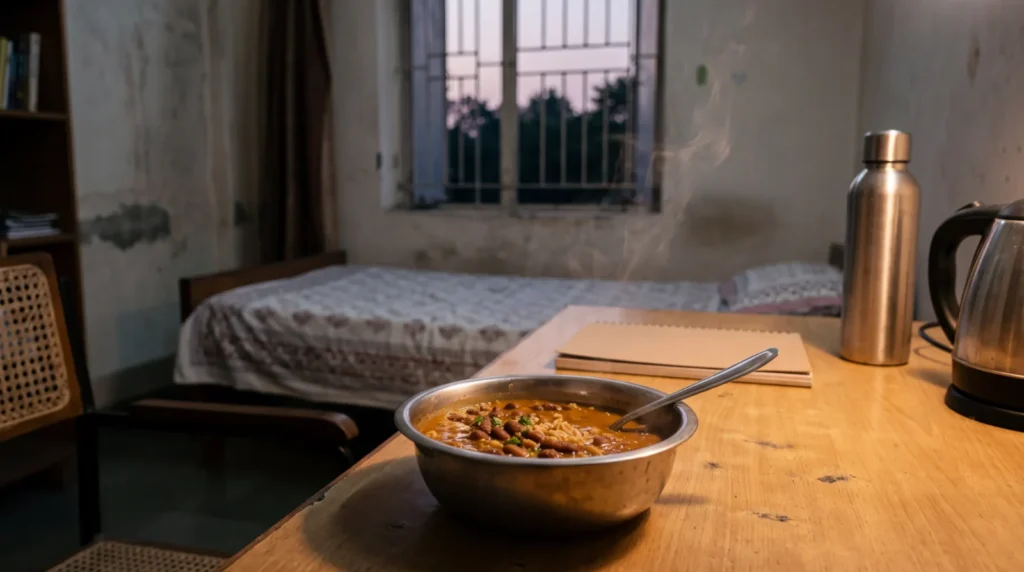
The best ready-to-eat food for hostel students is instant food that needs no fridge, no stove and nothing more than hot water: freeze-dried Indian meals, retort pouch curries with rice, instant poha or upma, and dry snacks like roasted chana and makhana. Keep 5 to 7 proper meals and a jar of snacks in a sealed box in your hostel or PG room, and a shut mess, a late lab or an exam night no longer means going to bed hungry.
Quick answer: stock meals that need only hot water, last for months at room temperature and give you dal, rajma or khichdi with rice, not just another packet of noodles.
Why do hostel students need ready-to-eat food?
Mess timings are fixed, and life in a hostel is not. Most hostel rooms have no kitchen and no fridge, and many hostels ban induction cooktops, heaters and sometimes even kettles. The hot water dispenser in the mess or corridor is often the only cooking tool you have.
These are the moments when a box of ready meals earns its place:
- Mess closed: Sunday dinners, festival breaks and the days after exams when most students go home.
- Late study nights: dinner at 8 pm, still awake at 1 am, and the canteen is shut.
- Missed meals: labs, practicals or placement tests that run past mess time.
- Mess food you cannot eat: fasting days, a no onion no garlic diet, or the week you feel low and just want plain khichdi.
What food can you keep in a hostel room without a fridge?
Anything sealed, dry or shelf-stable works. Here is how the common options compare for hostel ready-to-eat food:
| Food | What it needs | How long it keeps | Best for |
|---|---|---|---|
| Freeze-dried Indian meals | Hot water and a few minutes | Months, while sealed (check the date on the pack) | A full dinner, and carrying back after holidays |
| Retort pouch curries and rice | Warming in hot water, or eaten at room temperature | Months, while sealed (check the pack) | A full meal, though heavier to carry |
| Instant noodles and cup soups | Hot water, 3 to 5 minutes | Months | A quick snack, not a real meal |
| Instant poha, upma and oats | Hot water | Months, while sealed | Breakfast before an early class |
| Roasted chana, makhana, peanuts, khakhra | Nothing | A few weeks once opened, in an airtight jar | Snacks between classes |
| Home-made thepla, laddoos, chikki | Nothing | Days to a couple of weeks, depending on the recipe | The first week back from home |
Freeze-dried, retort pouch or instant noodles: which is best for hostel life?
Freeze-dried meals are the lightest, because the water has been taken out. Ten of them fit in a backpack, which matters when you are carrying a month of food back on a train. They only need hot water, so a mess dispenser is enough.
Retort pouch meals still hold their water, so they are heavier and bulkier, but they are ready the moment you open them and can be eaten warm or at room temperature. Instant noodles are cheap and fast, yet a bowl of mostly refined flour and salt leaves most people hungry again by midnight. For a closer look at how these formats differ, see retort vs freeze-dried vs dehydrated food.
A practical hostel mix is freeze-dried meals for dinners, instant poha or upma for breakfasts, and dry snacks for everything in between.
How do you make a hot meal in a hostel without a kitchen?
- Get hot water. Use the mess or corridor dispenser, or an electric kettle if your hostel allows one. Check the rules first, because many hostels confiscate heating appliances during room checks.
- Use a container with a lid. The meal’s own tub, a steel tiffin or a mug with a lid all work.
- Add water to the fill line and stir well. Scrape the bottom so no dry pockets of rice stay hidden.
- Cover and wait the full time. Dispenser water is often less hot than freshly boiled water, so give it 2 to 3 extra minutes if the rice still feels firm.
- Stir again, eat, and rinse the container at once. Dried dal sets hard on steel and is a pain to scrub later.
If a meal comes out thick or crunchy, the fix is almost always more water or more time. This guide on how to rehydrate freeze-dried food covers the common mistakes.
What should you pack when going back to the hostel from home?
- One week of dinner meals, more if your mess often closes on weekends.
- Breakfast packets for early classes.
- A jar of dry snacks: roasted chana, makhana or peanuts.
- A steel mug or tiffin with a lid, and your own spoon.
- A sealed plastic or steel box to store it all. Hostel rooms attract ants and mice, and an open packet under the bed rarely survives a week.
For the dinner slot, freeze-dried rajma chawal from Spice Up Foods is a full meal in a tub, and freeze-dried poha covers breakfast. Both are 100% vegetarian with no preservatives and need hot water, 7 minutes. With a 6 months shelf life, a box packed at the start of term keeps well into the semester.
What are the hostel food essentials to keep in your room?
A small, sealed food kit covers most late nights and skipped mess meals. The same list works in a PG room, where the kitchen may be shared or locked after a fixed hour.
- 5 to 7 hot water meals. Dal chawal, rajma chawal or freeze-dried khichdi for nights when the mess is closed.
- A few breakfast packs. Instant poha, upma or oats for early classes.
- One jar of dry snacks. Roasted chana, makhana or peanuts for study nights.
- A steel mug or tumbler and a spoon. Steel handles boiling water and is easy to wash in a bathroom sink.
- An airtight box. Ants and mice find open packets fast in most hostels.
- A kettle, only if allowed. Many hostels take away kettles and induction plates, so read the rules before buying one.
Rotate the stock: eat the oldest pack first and top the box up each time you go home.
How to choose ready-to-eat food for hostel students
- Hot water only. Skip anything that needs a microwave or a stove.
- Shelf life longer than your next trip home. Check the date on every pack.
- A real meal. Dal chawal, rajma chawal or khichdi keeps you full far longer than noodles.
- Fits your diet. Vegetarian, Jain or no onion no garlic options exist, so you do not have to compromise.
- Light and compact. You will carry it in a bag on a bus or train, not in a car.
- Eats from its own container. Fewer dishes to wash in a shared bathroom sink.
Read next: how long ready-to-eat food lasts, or are ready-to-eat meals healthy.
Questions people ask
What is the best ready-to-eat food for hostel students?
Freeze-dried or retort pouch Indian meals such as dal chawal, rajma chawal and khichdi are the best choice, because they need only hot water, keep for months without a fridge and make a full meal. Add instant poha or upma for breakfast and roasted chana or makhana for snacks.
What food can I keep in my hostel room without a fridge?
Sealed freeze-dried meals, retort pouches, instant poha, upma and oats, roasted chana, makhana, peanuts, khakhra and dry home-made sweets all keep without a fridge. Store them in an airtight box to keep out ants and mice, and finish opened packs within a few weeks.
Can I cook food in a hostel room without a kitchen?
Most hostels do not allow cooking, so the practical option is food that is ready with hot water from the mess or a water dispenser. An electric kettle helps, but check your hostel rules first because many hostels ban heating appliances in rooms.
Is it okay for students to eat ready-to-eat food every day?
Ready-to-eat food works well as a backup for missed mess meals and late nights, but it should not fully replace fresh food. Pick dal, rajma or khichdi meals over instant noodles, eat fruit when you can, and follow your doctor if you have a specific diet.
What instant food is best for hostel students?
Instant food that makes a full meal is the best choice: freeze-dried or retort pouch dal chawal, rajma chawal or khichdi, with instant poha or upma for breakfast. They need only hot water, keep without a fridge and keep you full far longer than instant noodles or cup soups.
When the mess is shut and it is past midnight, a proper bowl of dal and rice beats another packet of noodles, and that is exactly what Spice Up Foods’ freeze-dried Indian meals are made for. See Spice Up Foods meals