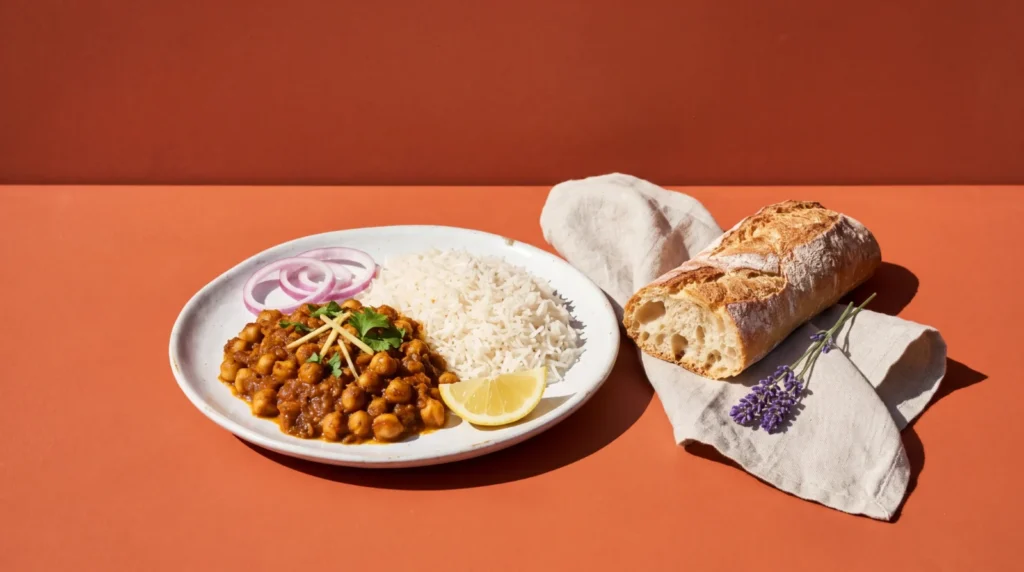
The best Indian food to take to France as a student is dry staples, small packs of spice mixes and sealed vegetarian ready meals without dairy, such as freeze-dried dal chawal, chole chawal, poha and upma. Leave ghee, paneer, milk sweets and anything with meat at home, because the EU generally does not allow travellers from outside the EU to bring in meat or milk products.
France now has tens of thousands of Indian students, mostly in Paris, Lyon, Lille, Toulouse and Grenoble. Most arrive in late August or September, spend the first weeks on bank accounts, housing paperwork and a residence permit, and live in small studios with a two plate hob. Food from home matters most in exactly those weeks.
What Indian food can students take to France?
The EU rule that catches Indian students out is about milk. Under EU rules for personal imports, meat and milk products from outside the EU are generally not allowed in passenger baggage, and that includes ghee, paneer, khoa sweets and dishes made with cream or butter. Check the official EU personal imports page and French customs before every trip, because rules and exceptions can change.
| Pack it | Leave it at home |
|---|---|
| Toor, moong and masoor dal, besan, poha, sooji | Ghee, paneer, butter, milk powder |
| Spice mixes in small sealed packs: sambar, rajma, chole, garam masala | Milk sweets such as barfi, peda, rasgulla |
| Ready meals with no milk products on the ingredient list, such as many dal, chole, rajma, poha and upma meals | Ready meals made with cream, butter or paneer |
| Pickle in a sealed jar, papad, khakhra | Fresh fruit, vegetables, leaves and seeds |
Declare food if an officer asks, keep it in original sealed packs, and carry a short list of what is in your bag.
Which ready meals are best for the first month?
Pick meals that need nothing but hot water, and read the ingredient list on every pack to make sure there is no milk, butter, cream or paneer. A freeze-dried meal is light, has 6 months shelf life and is ready with hot water, 7 minutes, which suits a studio with no pans yet and a kettle borrowed from a neighbour.
- Freeze-dried chole chawal for a filling dinner after a long day of paperwork at the prefecture.
- Freeze-dried yellow dal chawal for the plain, familiar meal you want when you are tired and homesick.
- Poha or upma for breakfast before morning lectures.
- Rajma chawal or khichdi for cold evenings from November to March.
About 15 to 20 meals cover the first three weeks well. After that, most students cook.
How do Indian students eat on a budget in France?
- Use the CROUS restaurants. University restaurants serve full meals at a low student price and usually have a vegetarian option every day. Ask for the “plat végétarien”.
- Shop smart. Lentils, chickpeas, rice, potatoes, onions, tomatoes and frozen spinach are cheap in French supermarkets. Indian shops in Paris and larger cities stock atta, dal and spices, but at higher prices.
- Cook in batches. One pot of dal on Sunday covers three dinners. A studio fridge is small, so freeze portions in boxes.
- Keep a backup shelf. A few ready meals for exam weeks, strikes, late trains and Sundays when many shops close.
Is French food vegetarian friendly?
Traditional French cooking uses a lot of meat stock, lardons and gelatine, so ask before you order. Soups, quiches and sauces often hide meat even when the menu does not say so. Safer choices are ratatouille, galettes with cheese and egg or mushroom, falafel, pizza, and the vegetarian dish at the CROUS. Learn two phrases: “je suis végétarien” (I am vegetarian) and “sans viande” (without meat). Vegetarian students who avoid eggs should also ask “sans oeuf”.
What do students wish they had packed?
- A small pressure cooker, because dal and rajma take far longer on an electric plate.
- A steel tiffin for carrying lunch to campus.
- More hing, kasuri methi and sambar powder, which are hard to find outside big cities.
- A few comfort meals for the first winter, when daylight ends before 6 pm.
To understand why freeze-dried meals stay light and last without a fridge, read freeze-dried vs ready-to-eat meals.
Read next: Indian food to take to Germany as a student and Indian food to take to Ireland as a student
Questions people ask
Can I take Indian food to France?
Yes, students commonly carry dry, sealed vegetarian food such as dal, rice, spices, poha and ready meals for personal use. Meat and milk products from outside the EU are generally not allowed, so check the official EU and French customs pages before you fly.
Can I take ghee or paneer to France from India?
Usually no. Ghee, paneer, butter and most milk products count as milk products under EU rules for travellers from outside the EU, and can be taken away at the airport. Buy dairy in France instead, where it is easy to find.
Is vegetarian food easy to find in France?
Easier every year. University CROUS restaurants usually offer a vegetarian dish, supermarkets sell lentils, chickpeas and frozen vegetables, and Paris has many Indian and South Indian restaurants and grocery shops.
What Indian ready meals are best for students in France?
Meals with no milk products, such as many dal chawal, chole chawal, rajma chawal, poha and upma meals, are the safest choices; always read the ingredient list. Freeze-dried versions are light to carry and need only a kettle: hot water, 7 minutes.
For the first weeks in France, Spice Up Foods makes freeze-dried, 100% vegetarian Indian meals that need only a kettle. See Spice Up Foods meals