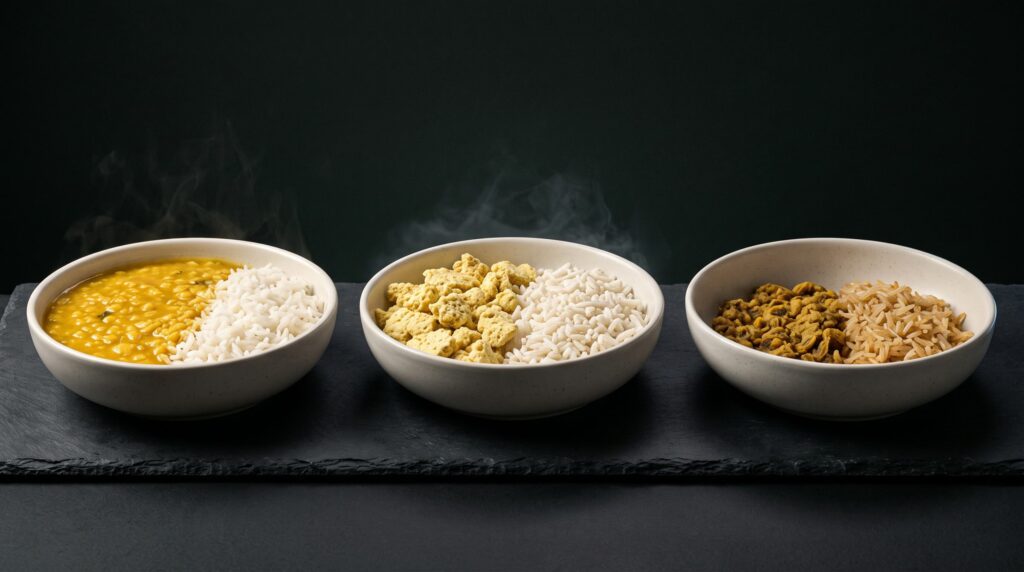
Walk into any travel shop or scroll any online store and you will see three kinds of ready meals: retort, freeze-dried and dehydrated. They all stay fresh without a fridge. They do it in very different ways, and that changes how heavy the pack is, how you cook it and how it tastes.
Here is the short version, then the detail.
The short answer
- Retort: wet food with gravy, sealed in a pouch and heated to kill germs. Easy to eat, but heavy.
- Freeze-dried: cooked food that is frozen, then the ice is removed. Very light. Add hot water and it becomes a meal again.
- Dehydrated: cooked food dried with hot air for hours. Light, but the pieces turn hard and usually need cooking on a stove.
1. Retort meals
A retort meal is cooked food packed in a strong pouch with all its gravy. The sealed pouch is then heated under pressure. This kills germs, so the food stays safe for months without a fridge.
Good: you can heat it in boiling water or a microwave, and some can be eaten straight from the pouch.
Not so good: you carry all the water in the gravy, so a pouch is heavy. Because the food is heated twice, it often comes out very soft.
Best for: home, office and car trips where weight does not matter.
2. Freeze-dried meals
Freeze-dried food is cooked first, like normal food. Then it is frozen solid and placed in a machine that pulls the ice out without melting it. What is left is dry, light food that keeps its shape and colour.
Good: very light to carry. You only need hot water from a kettle or flask. Because no cooking heat is used to dry it, more of the taste and colour stays.
Not so good: it costs more to make than the other two, so it can cost more to buy.
Best for: treks, flights, hostels and students moving abroad, anywhere weight and a missing kitchen matter.
3. Dehydrated meals
Dehydrated food is dried with warm air for many hours until most of the water is gone. The pieces shrink and become hard.
Good: light and usually cheaper.
Not so good: it takes longer to come back to life. Many packs need soaking and a few minutes of cooking on a stove. The texture is often chewier than fresh food.
Best for: camping trips where you carry a stove and have time to cook.
Side by side
| Retort | Freeze-dried | Dehydrated | |
|---|---|---|---|
| Inside the pack | Wet food with gravy | Dry, light pieces | Small, hard pieces |
| Weight | Heavy | Very light | Light |
| How to eat | Heat the pouch | Add hot water | Soak, then cook |
| You need | Stove or microwave | Kettle or flask | Stove and time |
| Taste and texture | Soft, saucy | Closest to fresh | Chewier |
Which one should you pack?
If you will have a microwave and weight does not matter, retort is fine. If you are flying, trekking or moving abroad and want the lightest pack that needs only hot water, choose freeze-dried. If you have a stove, time and a tight budget, dehydrated works.
Whatever you buy, read the label. Check the ingredient list, the salt per serving and the date on the pack.
Questions people ask
Which kind of ready meal is lightest to carry?
Freeze-dried. Almost all the water is taken out, so a meal for one weighs very little. Retort pouches keep their gravy, so they are the heaviest.
Which one is quickest to make?
Retort meals only need heating. Freeze-dried meals need hot water and a few minutes of waiting. Dehydrated meals usually need soaking and then cooking on a stove.
Do I need a fridge for any of them?
No, not while the pack is sealed. Once you open it or add water, treat it like fresh food and eat it soon.
Which one tastes most like home food?
Freeze-dried food is cooked once and then dried without cooking heat, so it keeps more of its taste, colour and shape. Retort food is heated hard inside the pouch, and dehydrated food is dried with hot air for hours.
If you want freeze-dried Indian food, Spice Up Foods makes dal chawal, khichdi, pav bhaji and more, all 100% vegetarian and ready with hot water. See Spice Up Foods meals.